
WELCOME BONUS 300%
UP TO €2000 + 100
FREE SPINS
UP TO €2000 + 100
FREE SPINS
Home → Blackjack
Blackjack at Vaycasino: Variants, Rules and Payouts
How long does a Live Blackjack round take?
Live Blackjack rounds, such as Infinite Blackjack and Quantum Blackjack Plus Live, can vary in duration based on gameplay and player decisions. A typical round, assuming optimal strategy and no complex side bets, might take between 45 to 75 seconds. This timeframe includes dealing cards, player betting periods, and dealer actions.
The engagement for high rollers is maintained through quick decision-making windows, especially in games like Infinite Blackjack which offers unlimited seats, reducing waiting times between hands. The minimum bet for Infinite Blackjack is 1 EUR, but can go up to 5,000 EUR, making each rapid round potentially significant for those with larger stakes.
For players aiming for maximum engagement within their high-stakes sessions, understanding these round durations is crucial for managing their bankroll and gameplay intensity. A rapid succession of these rounds at Vaycasino can lead to substantial turnover in a short period, especially when playing at tables with 5,000 EUR bet limits.
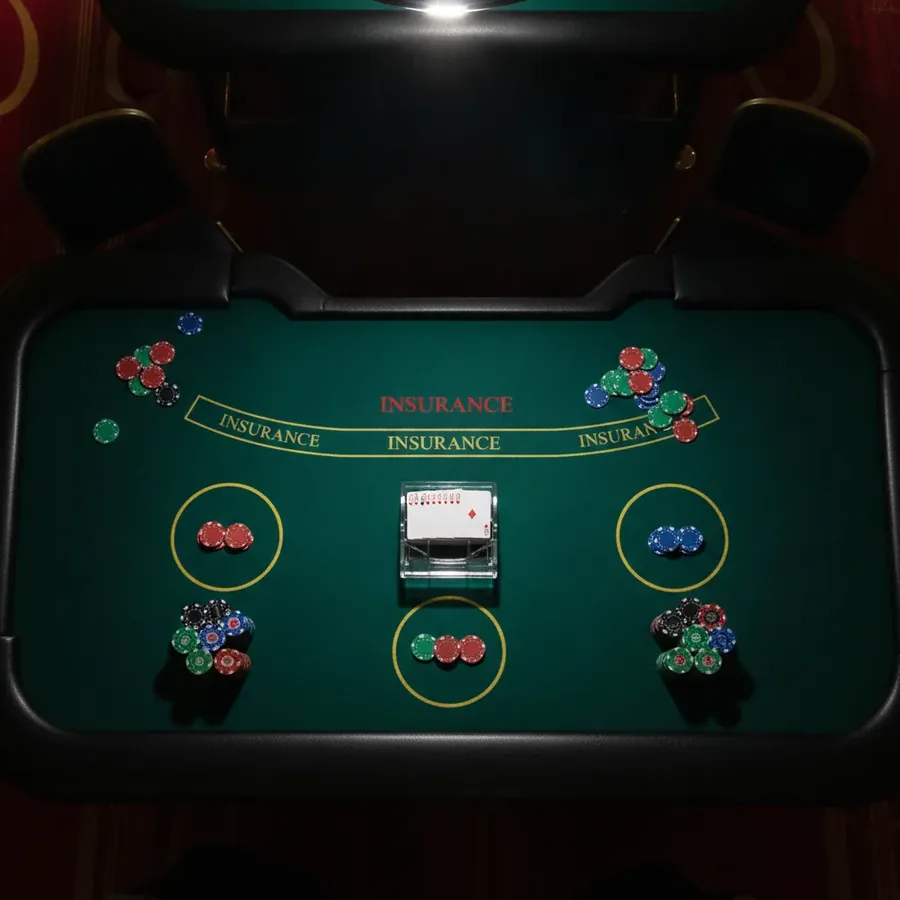
Bust at 22: Stake Lost Immediately
In certain Blackjack variants at Vaycasino, exceeding a total of 21, known as busting, results in an immediate loss of the player's stake. This applies across most standard Blackjack games and specific live variants. For instance, in Blackjack 6 Decks with a 0.46% house edge, busting means the wager is forfeit.
High rollers need to be particularly mindful of this rule when placing substantial bets, such as the 5,000 EUR maximum on Infinite Blackjack or Quantum Blackjack Plus Live. A single misstep or a dealer's favorable hand can lead to an immediate loss of a significant portion of their session's capital.
The consequence of busting at 22 is a direct reduction in the player's funds, without any possibility of recovery for that hand. This immediacy underscores the importance of adhering to basic strategy, especially in games with liberal rules that aim to reduce the house edge, such as those with a 0.28% house edge.
Register Late Surrender correctly in three steps
Late Surrender is a rule that allows a player to forfeit their hand after the dealer checks for Blackjack, losing half their stake. This option can significantly improve the Return to Player (RTP) by approximately 0.08 percentage points, making it a valuable tool for strategic players. At Vaycasino, this is offered in specific Blackjack variants.
To correctly register Late Surrender, a player must first assess their hand against the dealer's upcard, and crucially, ensure the dealer has not already revealed a Blackjack. If the player decides to surrender, they then indicate this to the dealer, who will take half the bet and discard the cards. This process is vital for high rollers looking to mitigate losses on unfavorable hands.
The benefit of Late Surrender is particularly pronounced in situations where the player's hand is statistically unlikely to win, such as a hard 16 against a dealer's 10. By surrendering, a player at a table with bets up to 5,000 EUR can strategically preserve capital, as opposed to losing the full stake.
Infinite Blackjack uses the Six Card Charlie
Infinite Blackjack, a popular live dealer game available at Vaycasino, offers an unlimited number of seats and incorporates the 'Six Card Charlie' rule. This rule states that if a player is dealt six cards without busting, they automatically win against the dealer, regardless of the dealer's hand. This provides an additional winning condition for players.
For high rollers playing Infinite Blackjack with bets up to 5,000 EUR, the Six Card Charlie rule can be a significant advantage, especially when facing a strong dealer's hand. It provides a path to victory even if standard hitting strategies lead to a seemingly weak total.
The presence of the Six Card Charlie rule in Infinite Blackjack distinguishes it from other variants and adds a layer of strategic depth. While standard Blackjack payouts at 3:2 are the primary win condition, this rule offers an alternative route to profit on a single hand, enhancing player engagement.
Insurance vs Even Money on Own Blackjack
Insurance is a side bet offered when the dealer's upcard is an Ace, allowing players to wager on whether the dealer has a Blackjack. It pays 2:1, but it has a high house edge of 7.47% for standard 6-8 deck games. Basic strategy dictates players should always decline this bet unless card counting indicates a true count of +3 or higher.
Even Money, on the other hand, is an option presented to a player who has a natural Blackjack when the dealer shows an Ace. It allows the player to take a 1:1 payout immediately, effectively forfeiting the chance for the dealer to also have a Blackjack and the potential for the insurance bet to win. This offers a guaranteed, albeit lower, payout.
For high rollers, the decision between Insurance and Even Money on their own Blackjack, especially with large stakes up to 5,000 EUR, hinges on risk tolerance and strategy. While Even Money guarantees a return, it foregoes the potential for a larger payout if the dealer does not have Blackjack and the player's own Blackjack would have won against a non-Blackjack dealer hand.
Blackjack variants at a glance
| Variant | Payout | House edge | Rule | Bet range |
|---|---|---|---|---|
| Blackjack 6 Decks, S17, DAS, DOA, Auszahlung 3:2, Basisstrategie | 99.54% | 0.46% | Dealer steht auf Soft 17; Verdopplung auf jeder Zweierkarte; Verdopplung nach Split erlaubt; keine Aufgabe. Basisstrategie ist für diesen Wert zwingend | Blackjack 3:2, normaler Gewinn 1:1, Insurance 2:1 |
| Blackjack Surrender (Late Surrender) – Regel-Effekt | n.a. (Regel-Modifikator) | −0.08 Prozentpunkte | Spieler gibt Hand nach Dealer-Blackjack-Prüfung auf, verliert die Hälfte des Einsatzes. Verbessert RTP um ca. 0.08 Prozentpunkte. Early Surrender ist wesentlich wertvoller (bis −0.6 Prozentpunkte), aber extrem selten. | Rückzahlung 50% des Einsatzes |
| Blackjack Insurance / Versicherung (6–8 Decks) | 92.53% | 7.47% | Separate Nebenwette bis 50% der Hauptwette, wenn der Dealer ein Ass hat. Basisstrategie schreibt IMMER Ablehnung vor (außer Karten zählen bei True Count ≥ +3). Bei einem Deck Vorteil ≈ 5.88% | Insurance 2:1 |
| Blackjack Auszahlung 6:5 statt 3:2 (6 Decks) | 98.15% | 1.85% | Ersatz von 3:2 durch 6:5 fügt exakt +1.39 Prozentpunkte zum Vorteil des Casinos hinzu – stärker als jede andere Regeländerung. Bei $10 Einsatz zahlt Blackjack $12 statt $15. | Blackjack 6:5, Gewinn 1:1 |
| Blackjack Ein Deck, klassische Regeln, 3:2 | 99.85% | 0.15% | Weniger Decks = niedrigerer Vorteil; ein Deck gibt ca. −0.48 Prozentpunkte gegenüber 8 Decks. Oft durch 6:5 Auszahlung kompensiert. | Blackjack 3:2, Gewinn 1:1 |
| Blackjack Split / Double / H17 – Regel-Effekte | n.a. (Regel-Modifikatoren) | H17 +0.22 Prozentpunkte; RSA −0.08 Prozentpunkte; DAS −0.14 Prozentpunkte | Dealer Hits Soft 17 verschlechtert RTP um 0.22 Prozentpunkte; Resplit Aces verbessert um 0.08 Prozentpunkte; Double After Split verbessert um ca. 0.14 Prozentpunkte; 6 Decks statt 8 – ca. 0.02 Prozentpunkte. | Double – Einsatz ×2 mit einer Karte; Split – bis 4 Hände; Ass-Split meist mit einer Karte. |
What Hole Card Means at a Live Table
At a live table, the dealer's hole card is a critical component of Blackjack. While not explicitly detailed for Vaycasino's live offerings, the general principle applies: this face-down card significantly influences player decisions. Understanding its potential value can impact strategic choices, especially when considering side bets or specific playing actions.
In Infinite Blackjack, a popular live variant, the presence of side bets like 'Any Pair' or '21+3' introduces additional layers of complexity. These bets are often triggered by the player's initial hand in conjunction with the dealer's upcard, though the hole card's specific impact on their payout structures isn't detailed in the provided data for this game.
For players engaging with Quantum Blackjack Plus Live, the potential for Quantum multipliers up to 1,000x on three-card 21s adds a high-stakes element. While the core game mechanics are similar to traditional blackjack, the anticipation of these multipliers, influenced by all dealt cards including the hole card, can be a significant draw for high rollers.
What a Natural Blackjack Practically Pays Out
A natural Blackjack, achieved with an Ace and a ten-value card on the initial two cards, typically pays out at 3:2. For instance, a 100 EUR bet on a table offering this payout would yield 150 EUR in winnings, plus the original stake returned. This is a fundamental aspect of the game across many variants.
However, some Blackjack variants, such as the 'Blackjack Auszahlung 6:5' example, reduce this payout to 6:5. A 100 EUR bet in this scenario would only return 120 EUR. This seemingly small difference adds 1.39 percent points to the house edge, a substantial increase for high rollers.
The highest possible RTP for a Blackjack game listed is 99.85% for a single-deck game with classic rules and a 3:2 payout. This translates to a house edge of only 0.15%, making it highly favorable for players. In contrast, the 6:5 payout variant has a significantly higher house edge of 1.85%.
Splitting Eights vs Standing on 16
In standard Blackjack strategy, splitting a pair of eights is generally recommended, particularly when facing a dealer's ten-value card or Ace. The logic behind this is that two eights total 16, a notoriously weak hand that often results in a bust when hitting. Splitting creates two potentially stronger hands.
Consider a scenario with a pair of eights against a dealer's 10. Standing on 16 means accepting a high probability of losing. Splitting, however, allows for two new initial hands, potentially improving the player's outcome significantly. This strategic decision is crucial for optimizing the RTP, which can be as high as 99.72% in games with liberal rules.
The 'Blackjack Liberal Vegas Strip' variant, with an RTP of 99.72%, features a favorable combination of rules including Split After Resplit (DAS) and Resplit, which directly support splitting hands. These liberal rules allow players to re-split Aces, further enhancing the strategic advantage gained from splitting pairs like eights.
Error insurance: 7 percent additional house edge
Blackjack Insurance is a side bet offered when the dealer's upcard is an Ace. This bet, typically up to 50% of the main bet, pays 2:1 if the dealer has a Blackjack. However, the 'Blackjack Insurance' example shows a significantly high RTP of 92.53%, resulting in a substantial house advantage of 7.47%.
Basic strategy dictates that players should always decline insurance, except for advanced card counters when the true count is +3 or higher. For the average player, consistently taking insurance will erode their bankroll, as the house edge on this side bet is considerably higher than on the main hand. This makes it a costly proposition for high rollers.
The detrimental effect of insurance is evident when comparing its 7.47% house edge to the 0.28% house edge of 'Blackjack Liberal Vegas Strip' played with optimal strategy. For every 100 EUR wagered on insurance, a player can expect to lose 7.47 EUR on average, a stark contrast to the minimal expected loss on the main game.
Splitting tens costs expected value: better stand
Splitting a pair of tens is almost always a strategic mistake in Blackjack, as it significantly reduces the player's expected value. A hand of two tens totals 20, which is a very strong hand that wins against most dealer upcards. Splitting this into two hands of ten would result in two weaker hands.
For example, in 'Blackjack 6 Decks, S17, DAS, DOA, Auszahlung 3:2, Basisstrategie', the RTP is 99.54% when played optimally. If a player were to split a pair of tens in this scenario, they would be breaking down a hand with a high probability of winning into two separate hands that are individually less powerful, thereby decreasing their overall potential return.
The consequence of incorrectly splitting tens is a direct reduction in potential winnings. Instead of aiming for a strong 20, the player would be trying to win with two hands that are much more vulnerable to the dealer's potential Blackjack or a strong 17-21 total. This contrasts sharply with the positive strategic implications of splitting eights.
Bet two percent of bankroll per hand
For high rollers, managing bankroll is paramount, and a common strategy suggests betting no more than two percent of the total bankroll per hand. For instance, with a substantial bankroll of €5,000, this would translate to a maximum bet of €100 per hand. This approach aims to protect capital during losing streaks and prolong playing time.
This conservative betting approach ensures that even a series of unfavorable outcomes does not rapidly deplete a player's funds. For example, losing ten consecutive hands with a €100 bet from a €5,000 bankroll would result in a loss of €1,000, or 20% of the initial bankroll, a manageable figure for a seasoned player.
This strategy is particularly relevant for high rollers participating in games like Infinite Blackjack or Quantum Blackjack Plus Live, which offer maximum bet limits of €5,000. Betting two percent of a significant bankroll, such as €10,000, at €200 per hand, allows for extended play even with a higher per-hand stake.
When can you increase your bet?
Experienced high rollers often increase their bets strategically, particularly when they observe favorable card conditions or have identified a positive deviation from the expected outcome. For example, in Blackjack Ein Deck with an RTP of 99.85%, a player might increase their bet if they are confident in their hand and anticipate a strong dealer upcard.
The concept of increasing bets is closely tied to managing risk and reward. In games like Quantum Blackjack Plus Live, where multipliers can significantly amplify winnings, a player might cautiously increase their stake when they believe they are approaching a high-payout combination, aiming for a potential 1,000x multiplier on a 21-point hand.
While not explicitly detailed for every game, strategic bet increases are often observed in situations where the player has a strong advantage. For example, after a string of favorable outcomes or when the game's flow seems to be in their favor, a high roller might decide to double their bet from €200 to €400 on a single hand at a live blackjack table.
Blackjack Party runs with two hosts
Blackjack Party, offered by Evolution, provides a lively atmosphere for high rollers with its unique setup featuring two hosts. This dual-host format differentiates it from standard blackjack tables, creating a more engaging and interactive environment suitable for players who enjoy a social gaming experience alongside their high-stakes play.
The presence of two hosts on Blackjack Party aims to enhance player engagement, making the experience feel more like a social gathering than a solitary casino game. This particular variant allows for stakes ranging from €1.00 up to €1,000, catering to a broad spectrum of players, including those with significant betting capacity.
While the primary focus is on entertainment, the core blackjack game mechanics remain. High rollers participating in Blackjack Party can still benefit from the standard gameplay, with the added dynamic of the dual hosts contributing to a potentially more enjoyable and prolonged session, even with a €1,000 bet per hand.
Blackjack Payout 3:2 Explained in Detail
The Blackjack Payout 3:2 is a crucial factor for high rollers seeking optimal returns, significantly impacting the game's profitability. For every €100 wagered, a blackjack (an ace and a ten-value card) pays out €150, illustrating a higher return compared to a 6:5 payout.
In contrast, a 6:5 payout for a blackjack on a €100 bet would only yield €120, representing a substantial difference of €30 per blackjack. This disparity is precisely why high rollers prioritize tables offering the 3:2 payout, as it directly reduces the house edge and increases potential winnings over time.
The Blackjack Ein Deck variant, for instance, features a 3:2 payout and an RTP of 99.85%, making it highly attractive. The house advantage is merely 0.15%, a testament to the favorable payout structure for players, especially those placing larger bets where such differences become more pronounced.
Split, Double Down, and Surrender in Numbers
The strategic use of Split, Double Down, and Surrender options can significantly alter a player's advantage in blackjack. For example, the Double After Split (DAS) rule, which allows players to double down after splitting a pair, improves the RTP by approximately 0.14 percentage points. This is a valuable option for high rollers looking to maximize winning hands.
The Surrender option, specifically Late Surrender, allows a player to forfeit half their bet after the dealer checks for blackjack, improving the RTP by about 0.08 percentage points. While Early Surrender offers a more substantial advantage, it is exceptionally rare. For a €100 bet, surrendering would result in a €50 loss, a calculated decision to mitigate greater potential losses.
Considering the numerical impact, a game with favourable rules such as S17 (Dealer Stands on Soft 17), DAS, DOA (Double on Any Ace), and Resplit Aces can achieve an RTP of 99.54% with a house edge of only 0.46%. These rule variations, particularly Double Down and Split, are critical for high rollers to leverage for better long-term outcomes.
Contact
Live - online chat
Banking









Providers












Vaycasino 2026